

How Does a Circulating Air Fan Improve Indoor Airflow and Comfort?
2026-09-07
Article Summary: A Circulating Air Fan is designed to do more than create a breeze in one direction. By moving and mixing air throughout a room, it can help reduce stagnant zones, distribute conditioned air more evenly, improve perceived comfort, and support more efficient use of heating and cooling equipment. This article explains how a circulating air fan works, why airflow circulation matters, which features buyers should evaluate, how to choose the right model, and how to maintain reliable performance. For households, offices, retail spaces, hospitality environments, and other indoor applications, understanding airflow behavior can make the difference between simply moving air and creating a more comfortable indoor environment.
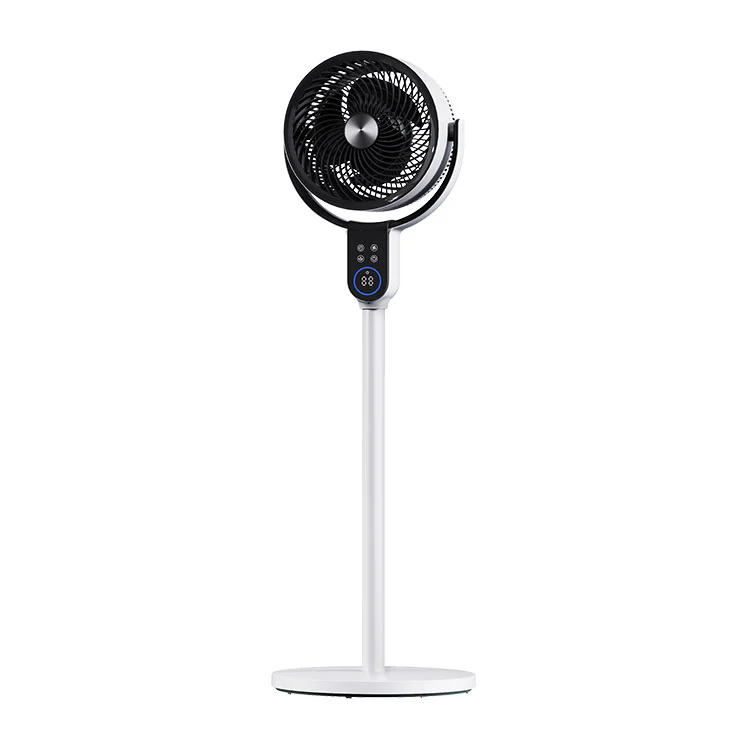
Table of Contents
- What Is a Circulating Air Fan?
- How Does a Circulating Air Fan Work?
- Why Use a Circulating Air Fan?
- Circulating Air Fan vs. Conventional Fan
- Which Features Matter Most?
- How to Choose the Right Circulating Air Fan?
- Where Can a Circulating Air Fan Be Used?
- How to Position a Circulating Air Fan?
- How to Maintain a Circulating Air Fan?
- Common Buying and Operating Mistakes
- Why Consider Cixi Jianhui Electrical Technology Co., Ltd.?
- Frequently Asked Questions
- Conclusion
What Is a Circulating Air Fan?
A Circulating Air Fan is an airflow appliance engineered to move air across a larger portion of an indoor space rather than simply blowing directly toward a person. Its primary purpose is to encourage continuous air movement and mixing, helping reduce areas where warm, cool, or stagnant air can accumulate.
This distinction is important because indoor air is rarely distributed evenly. Furniture, walls, ceilings, doors, windows, appliances, and room layout can all interfere with natural air movement. In a room with air conditioning or heating, the temperature near one part of the space may also differ noticeably from another area.
A well-designed circulating fan addresses this problem by generating a stronger and more directed airflow. Instead of treating the fan only as a personal cooling appliance, users can position it strategically to move air across the room and encourage better overall circulation.
For modern homes and commercial spaces, this can make a circulating air fan a practical complement to existing HVAC equipment. It does not necessarily replace an air conditioner or heater. Instead, it helps the air that has already been cooled or heated move more effectively throughout the occupied space.
How Does a Circulating Air Fan Work?
The operating principle is relatively straightforward, but several components work together to determine the final airflow performance.
- Motor: The motor supplies the rotational force required to drive the fan blades.
- Fan blades: Blade geometry influences airflow volume, velocity, direction, and noise.
- Air outlet and grille: These components guide and control the movement of air.
- Oscillation mechanism: Depending on the model, the fan may move horizontally, vertically, or through multiple directions.
- Speed control: Multiple speed levels allow users to adjust airflow according to room conditions.
When the motor rotates the blades, the blades accelerate air and create a directed stream. As this airflow travels through the room, it interacts with walls, ceilings, furniture, and other surfaces. The moving air then mixes with surrounding air, gradually creating broader circulation.
This is why positioning matters. A fan pointed directly at a person can provide immediate comfort, but a fan aimed toward a wall or across the room may be more effective when the goal is to encourage whole-room air movement.
Some modern models also include remote controls, timers, digital displays, adjustable height, multi-angle airflow, and multiple operating speeds. These functions can improve convenience while allowing users to adapt airflow to changing conditions.
Why Use a Circulating Air Fan?
The biggest advantage of a circulating air fan is that it focuses on air movement rather than simply producing a localized breeze. This approach can solve several common indoor comfort problems.
1. More Even Air Distribution
Rooms can develop hot and cold zones because air does not naturally mix perfectly. A circulating fan helps move air between these zones, making the indoor environment feel more consistent.
2. Better Use of Conditioned Air
When an air conditioner produces cool air, that air may remain concentrated in certain areas. Strategic circulation can help distribute conditioned air more effectively, potentially reducing the need to operate cooling equipment at unnecessarily aggressive settings.
3. Improved Personal Comfort
Air movement affects how people perceive temperature. Even when the actual room temperature changes only slightly, moving air can make an occupied area feel fresher and more comfortable.
4. Flexible Operation
A fan with multiple speed levels and adjustable airflow can serve different needs throughout the day. Low speed may be appropriate for quiet periods, while stronger airflow can be useful when rapid circulation is required.
5. Convenient Operation
Features such as remote control, timers, digital displays, oscillation, and adjustable height can reduce the effort required to manage airflow.
Circulating Air Fan vs. Conventional Fan
| Feature | Circulating Air Fan | Conventional Fan |
|---|---|---|
| Primary purpose | Encourage broader room air circulation | Provide direct airflow toward a nearby area |
| Airflow direction | Often designed for stronger, more focused airflow | Usually focused on personal or localized airflow |
| Room mixing | Well suited to continuous air mixing | May provide less whole-room circulation |
| Positioning flexibility | Often supports multiple angles or oscillation | Depends on model and design |
| Typical control options | May include multiple speeds, timers, remote control, and displays | Often uses simpler controls |
| Best suited for | Whole-room airflow management and comfort | Direct personal cooling |
The right choice depends on the actual purpose. If the objective is to feel a strong breeze immediately, a conventional fan may be sufficient. If the objective is to move air across a room and reduce stagnant areas, a circulating air fan is often the more appropriate solution.
Which Features Matter Most?
Not every Circulating Air Fan is designed in the same way. Buyers should evaluate the complete specification rather than focusing on a single performance number.
| Feature | Why It Matters | What to Consider |
|---|---|---|
| Motor type | Influences efficiency, airflow stability, and operating characteristics | Choose according to required operating time and performance level |
| Airflow strength | Determines how effectively air can be moved through the room | Consider room size and layout |
| Speed settings | Provides better control over airflow | More settings offer greater adjustment flexibility |
| Oscillation | Helps distribute airflow across a wider area | Look for suitable horizontal or multi-directional movement |
| Noise level | Affects comfort during sleeping, working, or studying | Important for bedrooms, offices, and quiet environments |
| Timer | Allows automatic shutoff | Useful for nighttime and scheduled operation |
| Remote control | Improves convenience | Useful when the fan is positioned far from the user |
| Adjustable height | Improves installation flexibility | Helpful for different furniture arrangements |
| Cleaning access | Supports long-term airflow performance | Look for removable or easy-to-clean components |
How to Choose the Right Circulating Air Fan?
Choosing a suitable fan should begin with the room and application rather than with appearance alone.
1. Evaluate Room Size
A compact room does not necessarily require the same airflow capability as a large living room, studio, retail space, or commercial environment. Consider the distance the air needs to travel and whether the airflow must reach multiple areas.
2. Consider the Room Layout
A room with partitions, furniture, high ceilings, or multiple occupied areas may require stronger circulation and greater directional flexibility.
3. Determine the Required Airflow Pattern
Decide whether you need direct airflow, wide-area oscillation, or more comprehensive circulation. Adjustable airflow direction can be particularly useful when room conditions change throughout the day.
4. Check Operating Noise
Noise can become a significant issue when a fan operates for many hours. Bedrooms, conference rooms, libraries, and workspaces generally benefit from quieter operation.
5. Consider Controls
For frequent operation, remote control, digital displays, timers, and multiple speed levels can provide meaningful convenience.
6. Think About Maintenance
Dust accumulation can affect airflow and cleanliness. A model that allows easier access to the grille and blades can simplify routine maintenance.
Where Can a Circulating Air Fan Be Used?
A Circulating Air Fan can be used in many indoor environments because its primary function is flexible air movement.
- Living rooms: Improve air movement across seating and activity areas.
- Bedrooms: Provide gentle circulation during rest while reducing stagnant air.
- Home offices: Help maintain a more comfortable working environment.
- Retail stores: Support airflow in customer and staff areas.
- Restaurants: Encourage movement of air in occupied spaces.
- Hotels: Provide flexible supplemental airflow for guest rooms and common areas.
- Studios: Help distribute air across larger open spaces.
- Workplaces: Improve comfort where centralized airflow does not reach every area equally.
Because every application has different requirements, fan selection should take into account room dimensions, occupancy, airflow distance, noise expectations, and operating schedule.
How to Position a Circulating Air Fan?
Even a powerful fan can perform poorly if it is positioned incorrectly. The goal should be to create an airflow path rather than simply blowing air toward the nearest person.
- Keep the intake area unobstructed. Do not place the fan directly against furniture or other objects that restrict air intake.
- Use walls strategically. In some rooms, directing airflow toward a wall can help create a broader circulation pattern.
- Consider ceiling height. Adjustable height can help target different layers of room air.
- Avoid unnecessary obstacles. Large furniture can interrupt airflow and reduce circulation efficiency.
- Use oscillation when appropriate. Multi-directional movement can help distribute air across larger areas.
- Adjust the speed according to conditions. Higher speed is not always necessary once the room has reached a comfortable condition.
How to Maintain a Circulating Air Fan?
Regular maintenance is essential for consistent performance. Dust and debris can accumulate on the grille, blades, and motor housing over time, restricting airflow and increasing mechanical resistance.
- Turn off and unplug the fan before cleaning.
- Remove dust from the grille and accessible surfaces regularly.
- Clean the blades according to the manufacturer's instructions.
- Check that the oscillation mechanism moves smoothly.
- Inspect the power cord and plug for visible damage.
- Keep the motor housing away from water and excessive moisture.
- Listen for unusual vibration, rattling, or mechanical noise.
- Stop operation if the fan develops a burning smell or abnormal electrical behavior.
Routine cleaning is particularly important in dusty environments or spaces where the fan operates for extended periods. Clean airflow components can help preserve the intended airflow characteristics and reduce unnecessary strain on the appliance.
Common Buying and Operating Mistakes
Choosing Based Only on Appearance
A stylish design is useful, but airflow performance, motor characteristics, control functions, noise, maintenance requirements, and durability should receive equal attention.
Ignoring Room Size
A fan that is too small may struggle to create sufficient circulation in a large room. Conversely, excessive airflow in a compact space may be uncomfortable or unnecessary.
Using Maximum Speed All the Time
Maximum speed is not always the best setting. Once sufficient air circulation has been established, a lower setting may provide a more comfortable balance between airflow and noise.
Neglecting Cleaning
Dusty blades and grilles can interfere with airflow. Regular cleaning is a simple but often overlooked part of maintaining performance.
Poor Positioning
Placing the fan where furniture blocks the intake or outlet can significantly reduce its effectiveness. Airflow should have enough space to move into the room.
Why Consider Cixi Jianhui Electrical Technology Co., Ltd.?
Cixi Jianhui Electrical Technology Co., Ltd. focuses on electrical household appliances and fan-related products, offering circulating air fan solutions for different user requirements. Its product range includes models designed around practical airflow management, adjustable operation, multiple speed options, and user-oriented functions.
For buyers evaluating a circulating air fan, working with an experienced manufacturer can provide advantages beyond the basic product itself. Product configuration, motor selection, airflow requirements, appearance, controls, packaging, and application conditions may all influence the final solution.
Cixi Jianhui Electrical Technology Co., Ltd. can therefore be considered when buyers are looking for circulating air fan products for residential, commercial, OEM, or distribution applications. The right model should be selected according to the intended market, operating environment, required airflow, control preferences, and product specifications.
For importers and distributors, it is also important to evaluate production capability, product consistency, communication efficiency, customization options, and after-sales support before establishing a long-term supply relationship.
Frequently Asked Questions
Is a Circulating Air Fan the same as a regular fan?
Not exactly. Both appliances move air, but a circulating air fan is generally designed to encourage broader room airflow and air mixing. A regular fan is often used primarily for localized personal cooling.
Can a Circulating Air Fan replace an air conditioner?
A circulating air fan does not actively lower room temperature in the same way an air conditioner does. Instead, it moves existing air and can help distribute cooled air more effectively. It is often used as a complementary appliance.
Does a Circulating Air Fan help distribute cool air?
Yes. When positioned correctly, it can move cool air away from concentrated areas and encourage mixing throughout the room. This can help reduce noticeable temperature differences within the space.
Are Circulating Air Fans suitable for bedrooms?
Yes. Models with quiet operation, adjustable speeds, timers, and smooth airflow control can be suitable for bedrooms. Users should choose settings that provide comfortable airflow without excessive noise.
What speed should a Circulating Air Fan use?
There is no universal speed setting. Start with a moderate level and increase or decrease it according to room size, temperature, airflow requirements, and personal comfort.
How often should a Circulating Air Fan be cleaned?
The appropriate interval depends on the environment and frequency of use. A fan operating daily in a dusty environment may require more frequent cleaning than one used occasionally in a clean room.
What should I check before purchasing a Circulating Air Fan?
Consider airflow performance, motor type, speed settings, noise, oscillation, adjustment range, timer functions, remote control, cleaning accessibility, construction quality, and the manufacturer's ability to support your intended application.
Can a Circulating Air Fan be used with heating equipment?
It can help distribute warm air within an indoor space when used appropriately. However, the fan should always be operated according to the safety requirements of both the fan and the heating equipment.
Conclusion
A Circulating Air Fan is more than a simple device for producing a breeze. Its real value comes from encouraging continuous air movement and helping distribute air throughout an indoor space. By reducing stagnant areas and improving air mixing, it can contribute to a more consistent and comfortable environment.
The best results depend on selecting the correct airflow capacity, motor configuration, speed range, oscillation function, noise level, controls, and adjustment features. Correct positioning and regular cleaning are equally important because even a well-designed fan cannot perform effectively when airflow is blocked or components are heavily contaminated with dust.
For households, offices, retail environments, hospitality applications, and other indoor spaces, the right circulating air fan can serve as a practical complement to existing ventilation, heating, and cooling systems. For distributors, importers, and OEM buyers, selecting a capable manufacturing partner is equally important for achieving consistent product quality and reliable supply.
If you are looking for a suitable Circulating Air Fan for your market or application, Cixi Jianhui Electrical Technology Co., Ltd. can provide product options and discuss the specifications, configurations, and customization requirements that match your project. Contact us today to discuss your Circulating Air Fan requirements and find a practical solution for your customers.