

Article Summary: A modern Mixing Machine can significantly improve material consistency, reduce manual labor, shorten mixing cycles, and make demanding construction or industrial mixing tasks easier to control. From mortar and putty ash to concrete, adhesives, coatings, and other viscous materials, choosing the right mixer requires more than simply comparing motor power. Capacity, speed control, paddle design, operator comfort, portability, overload protection, and maintenance requirements all affect real-world performance. This guide explains how a Mixing Machine works, what advantages it offers, how to select the right configuration, and how Zhouxun Mixing can support different material-mixing requirements.
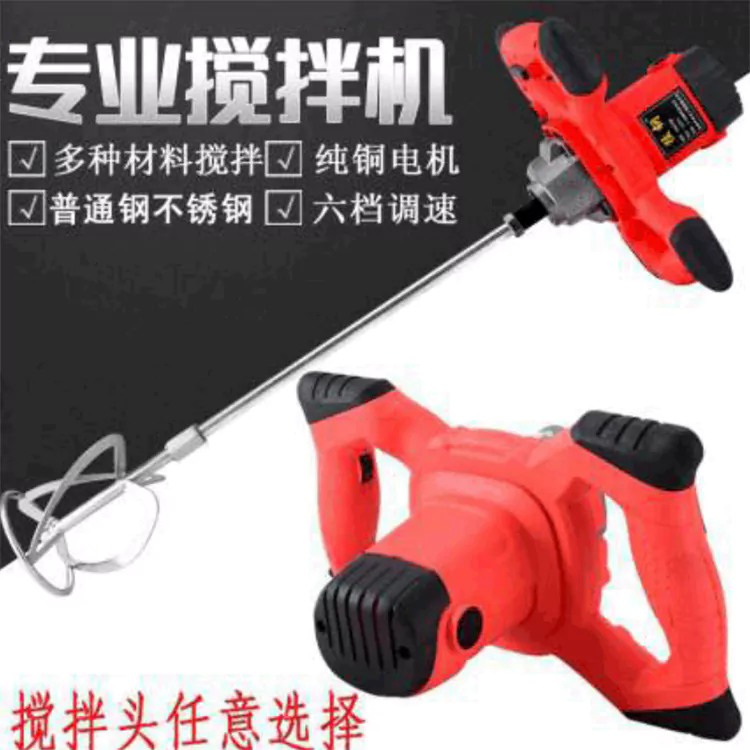
Table of Contents
- What Is a Mixing Machine?
- Why Is Consistent Mixing Important?
- How Does a Mixing Machine Work?
- Where Can a Mixing Machine Be Used?
- What Are the Main Benefits of Using a Mixing Machine?
- How Can You Choose the Right Mixing Machine?
- Mixing Machine Selection Factors at a Glance
- How Can Operators Get Better Mixing Results?
- How Can You Extend Mixing Machine Service Life?
- Common Mixing Problems and Practical Solutions
- Why Consider Zhouxun Mixing?
- Frequently Asked Questions
- Conclusion
What Is a Mixing Machine?
A Mixing Machine is mechanical equipment designed to combine two or more materials into a uniform mixture. Depending on the machine configuration, it can process materials ranging from relatively light powders and liquid compounds to dense mortar, concrete, putty, adhesives, coatings, and other high-viscosity mixtures.
Unlike manual mixing, which depends heavily on operator strength and technique, a powered mixer provides controlled mechanical agitation. The motor transfers rotational energy through a gearbox or drive mechanism to a mixing paddle or blade. As the paddle rotates, it moves material through the mixing container, helping distribute different components more evenly.
For professional users, the value of a Mixing Machine is not simply its ability to rotate a blade. The machine must provide sufficient torque, suitable speed, appropriate mixing capacity, reliable transmission, and a practical operating structure. A machine that is powerful but difficult to control may create more problems than it solves.
Modern product configurations can also include variable-speed operation, different paddle designs, overload protection, ergonomic handles, portable frames, and interchangeable attachments. These features allow one basic machine platform to serve different applications and material characteristics.
Why Is Consistent Mixing Important?
Material consistency directly influences the quality of the finished product or construction surface. If dry and wet components are not distributed evenly, the mixture may contain lumps, dry pockets, excessive liquid, or areas with insufficient binder.
For example, inconsistent mortar can affect workability and surface quality. Poorly dispersed adhesive can create bonding weaknesses. In coating applications, insufficient mixing may result in uneven color or inconsistent viscosity. In construction materials, inadequate mixing can make downstream application more difficult and increase material waste.
A mechanical Mixing Machine addresses these challenges by maintaining a repeatable mixing motion. When the same material ratios, mixing time, paddle configuration, and operating speed are used, operators can establish a more predictable production process.
- Better material uniformity: Components are distributed more consistently throughout the mixture.
- Reduced manual variation: Results depend less on individual operator strength and technique.
- More predictable processing: Repeatable speed and mixing time make production easier to standardize.
- Lower material waste: More uniform batches can reduce rejected or improperly mixed material.
- Improved productivity: Mechanical mixing reduces the physical effort required for repeated batches.
How Does a Mixing Machine Work?
The basic working principle is straightforward, but the interaction between the motor, transmission system, paddle, material, and container determines the final mixing performance.
- Material loading: The required raw materials are placed into a suitable container or mixing vessel.
- Motor activation: Electrical or battery power drives the motor.
- Power transmission: The drive or gearbox transfers motor power to the mixing shaft.
- Paddle rotation: The paddle moves through the material and creates circulation within the mixture.
- Material redistribution: Components are repeatedly moved from different areas of the container toward and away from the mixing zone.
- Consistency verification: The operator determines when the desired texture, viscosity, or uniformity has been reached.
Speed is particularly important. A low speed can be useful when controlling heavy or highly viscous materials, while a higher speed may be appropriate for lighter compounds or faster dispersion. Excessive speed, however, can increase splashing, entrain air, create unnecessary wear, or make the machine harder to control.
This is why variable-speed control is valuable in professional applications. The operator can adjust the mixing action according to material characteristics instead of forcing every formulation through the same operating condition.
Where Can a Mixing Machine Be Used?
A versatile Mixing Machine can support numerous construction, renovation, manufacturing, and maintenance applications. The exact application depends on the machine's capacity, motor output, paddle design, and material compatibility.
| Application | Typical Materials | Important Requirement |
|---|---|---|
| Construction | Mortar, cement-based compounds, concrete-related mixtures | High torque and durable paddle |
| Wall Finishing | Putty, plaster, skim-coat materials | Uniform mixing and controllable speed |
| Tile Installation | Tile adhesive and related compounds | Consistent dispersion and manageable operation |
| Coatings | Paint, coatings, finishing compounds | Appropriate paddle geometry and speed |
| Industrial Processing | Adhesives, resins, compounds and other formulations | Torque, capacity, compatibility, and process control |
| Field Work | Various job-site mixing materials | Portability and robust construction |
For demanding applications, users should always confirm the machine's intended material range before operation. A machine designed for mortar or putty should not automatically be assumed suitable for every industrial formulation.
What Are the Main Benefits of Using a Mixing Machine?
The primary advantage of mechanical mixing is process control. Instead of relying on manual stirring, the operator can use a repeatable mechanical process to produce batches with more consistent characteristics.
1. Higher Mixing Efficiency
Mechanical agitation can process material continuously and consistently, making it particularly useful when multiple batches are required during a working day. This helps reduce the time and physical effort associated with manual mixing.
2. More Consistent Results
A controlled rotational movement helps distribute components throughout the mixture. Consistency is especially important when the material must meet a specific application requirement.
3. Reduced Operator Fatigue
Repeated manual stirring can be physically demanding. A powered machine transfers much of the mechanical workload from the operator to the motor and transmission system.
4. Flexible Speed Adjustment
Variable-speed control allows operators to adapt the mixing action to different materials. This can help balance productivity with control, particularly when switching between low-viscosity and high-viscosity formulations.
5. Better Job-Site Mobility
Compact and portable mixer designs are useful for renovation, interior finishing, construction sites, and other locations where materials must be prepared close to the point of application.
6. Reduced Material Loss
Features such as splash-control structures can help keep material inside the mixing area. Less splashing means cleaner working conditions and potentially less product waste.
How Can You Choose the Right Mixing Machine?
Selecting the right machine begins with the material rather than the motor. A powerful motor does not automatically make a mixer suitable for a particular process.
Material Type and Viscosity
Determine whether the material is powder-based, liquid-based, paste-like, fibrous, granular, or highly viscous. Dense materials require more torque and may require a different paddle geometry than lightweight compounds.
Required Batch Capacity
Consider the actual amount of material mixed per batch rather than choosing a machine solely based on maximum advertised capacity. Operating too close to the maximum load can reduce efficiency and place additional stress on the motor and transmission.
Motor Power
Motor power should match the workload. A smaller motor may be appropriate for light finishing compounds, while heavier construction materials can require substantially greater power and torque.
Speed Range
A wide usable speed range provides greater flexibility. The ideal speed depends on the material, paddle, batch size, and desired mixing action.
Paddle Configuration
The paddle is one of the most important components in the mixing system. Different geometries generate different flow patterns. A paddle intended for plaster or mortar may not provide the best performance for every coating, adhesive, or resin.
Portability
If the machine will move between rooms or construction sites, consider frame design, handle configuration, overall weight, and storage requirements. A portable machine can reduce setup time and simplify transportation.
Protection Features
Overload protection can be valuable when processing high-viscosity materials. Protection systems can help reduce the likelihood of motor damage when the machine encounters excessive resistance.
Maintenance Requirements
Look for accessible components, durable transmission parts, replaceable paddles, and straightforward cleaning procedures. Simple maintenance can make a significant difference over the machine's service life.
Mixing Machine Selection Factors at a Glance
| Factor | Questions to Ask | Why It Matters |
|---|---|---|
| Material | What will be mixed? | Determines paddle and torque requirements. |
| Viscosity | Is the material light, medium, or highly viscous? | Affects motor load and mixing speed. |
| Capacity | How much material is processed per batch? | Prevents under- or over-sizing the machine. |
| Speed | Do different materials require different speeds? | Improves process flexibility. |
| Paddle | Does the paddle match the material? | Influences circulation and final uniformity. |
| Ergonomics | Will the operator use it for long periods? | Helps reduce fatigue and improve handling. |
| Protection | Does the machine include overload protection? | Provides additional protection under demanding loads. |
| Maintenance | How easy is cleaning and servicing? | Supports reliable long-term operation. |
How Can Operators Get Better Mixing Results?
Even a well-designed Mixing Machine cannot compensate for incorrect operating procedures. The following practices can help improve consistency and reduce unnecessary machine stress.
- Follow the correct material ratio. Do not attempt to compensate for an incorrect formulation by simply increasing mixing speed.
- Load materials progressively when appropriate. Some formulations mix more efficiently when liquids and powders are introduced according to the manufacturer's recommended sequence.
- Start at a controlled speed. Beginning at a moderate speed can reduce splashing and prevent dry material from being thrown out of the container.
- Increase speed gradually. Adjust the machine according to material resistance and desired consistency.
- Do not exceed practical capacity. Overloading increases motor and gearbox stress and may reduce mixing uniformity.
- Keep the paddle properly positioned. Correct positioning improves circulation and reduces unnecessary contact with the container.
- Check consistency before discharge. A visual and physical inspection can help confirm that the batch is adequately mixed.
Operators should also wear suitable personal protective equipment according to the material being processed. Dust-producing powders, chemical compounds, and other potentially hazardous substances may require additional ventilation and protection measures.
How Can You Extend Mixing Machine Service Life?
Regular maintenance is essential for preserving motor performance, transmission reliability, and overall mixing quality. A maintenance routine does not have to be complicated, but it should be consistent.
- Clean the paddle after use: Hardened material can increase resistance during the next operation.
- Inspect the shaft and attachment: Check for looseness, deformation, or unusual wear.
- Inspect the power cable: Look for cuts, exposed conductors, or damaged insulation on corded equipment.
- Check ventilation areas: Keep motor ventilation openings free from excessive dust and debris.
- Monitor unusual noise: New vibration, grinding, or abnormal mechanical noise may indicate developing problems.
- Check fasteners: Periodically inspect screws, bolts, handles, guards, and structural connections.
- Follow lubrication requirements: Where applicable, use the recommended lubricant and service intervals.
- Store the machine properly: Keep it protected from unnecessary moisture, impact, and contamination.
Preventive maintenance is generally preferable to waiting until the machine stops working. Early detection of abnormal vibration, temperature, noise, or performance can help prevent more expensive repairs.
Common Mixing Problems and Practical Solutions
| Problem | Possible Cause | Recommended Check |
|---|---|---|
| Material remains lumpy | Incorrect mixing sequence or unsuitable paddle | Review material loading sequence and paddle selection. |
| Motor slows significantly | Excessive material resistance or overloaded batch | Reduce load and verify material viscosity. |
| Excessive splashing | Speed is too high or paddle is poorly positioned | Reduce initial speed and check paddle position. |
| Uneven mixture | Insufficient mixing time or poor circulation | Adjust mixing duration, speed, or paddle configuration. |
| Abnormal vibration | Unbalanced paddle, loose component, or mechanical wear | Stop operation and inspect the paddle and drive assembly. |
| Machine becomes unusually hot | Continuous overload, blocked ventilation, or mechanical resistance | Stop the machine, allow cooling, and inspect the cause. |
Operators should never continue using a machine when there is a serious electrical, mechanical, or structural fault. Disconnect the equipment from its power source before inspection or maintenance.
Why Consider Zhouxun Mixing?
Zhouxun Mixing provides Mixing Machine solutions designed for practical construction and material-processing requirements. The company's product range includes different mixer configurations for applications such as putty ash and related construction materials.
According to the product information, Zhouxun offers models covering different capacity requirements, with configurations ranging from compact units to higher-capacity machines. Its product range includes both conventional electric mixing equipment and lithium-battery-powered options, providing users with greater flexibility when working in different environments. The company also describes production capabilities that support larger-volume manufacturing and product development.
One of the key considerations when selecting equipment from a manufacturer is whether the supplier understands actual application requirements rather than simply offering a motor and paddle. Material type, batch capacity, operating environment, portability, attachment requirements, and production volume should all be considered before a final specification is selected.
The Mixing Machine solutions associated with Zhouxun emphasize practical features such as durable construction, speed control, portable designs, and configurations intended for construction-related mixing applications. These characteristics can be particularly useful for contractors, distributors, renovation professionals, and users who need dependable equipment for repeated mixing operations.
For buyers purchasing equipment in volume, customization and supply capability can also be important. Product configuration, packaging, appearance, capacity, and attachment requirements may need to be discussed according to the target market and application.
Frequently Asked Questions
What materials can a Mixing Machine handle?
The appropriate material range depends on the specific model, motor capacity, paddle, and operating conditions. Mixing machines can be used for many construction and industrial materials, including mortar, putty, plaster, adhesives, coatings, and other compounds. Always verify material compatibility before operation.
Is a higher-power Mixing Machine always better?
No. Higher power can provide additional torque, but an oversized machine may increase cost, weight, and energy consumption without providing meaningful benefits for a light-duty application. The best machine matches motor output and torque to the actual material and batch size.
Why is variable-speed control useful?
Different materials behave differently during mixing. Variable-speed control allows the operator to start gently, increase mixing intensity when appropriate, and reduce speed when handling materials that are prone to splashing or excessive air entrainment.
How important is the mixing paddle?
The paddle is extremely important because its geometry determines how material moves within the container. A suitable paddle can improve circulation and mixing efficiency, while an unsuitable paddle may leave unmixed areas or place excessive resistance on the motor.
Can one Mixing Machine be used for different materials?
Some machines can handle multiple materials when the motor, capacity, speed range, and paddle are suitable. However, users should evaluate material compatibility carefully. In some cases, changing the paddle or operating parameters is necessary.
How often should a Mixing Machine be cleaned?
The machine should generally be cleaned after each mixing session or whenever material could harden on the paddle and surrounding components. Prompt cleaning helps prevent buildup and makes subsequent operation easier.
What should I consider when buying a Mixing Machine for professional use?
Focus on material type, viscosity, batch size, motor power, torque, speed range, paddle design, portability, protection features, durability, maintenance requirements, and supplier support. For commercial users, availability of replacement components and consistent product supply should also be considered.
Are portable Mixing Machines suitable for construction sites?
Portable models can be highly practical for construction and renovation work because materials can be mixed close to where they are needed. The suitability depends on the machine's capacity, weight, power source, and the material being processed.
Can a Mixing Machine reduce labor requirements?
Yes. Mechanical mixing reduces the physical effort required to repeatedly stir and blend materials manually. The productivity improvement depends on batch size, material characteristics, machine capacity, and operating procedure.
Conclusion
A Mixing Machine is more than a simple powered stirring tool. It is an important part of a controlled material preparation process, helping users achieve more consistent mixtures while reducing manual effort and improving productivity.
The most suitable machine depends on the specific application. Material viscosity, batch capacity, motor power, torque, speed control, paddle configuration, portability, operator comfort, protection systems, and maintenance requirements should all be evaluated together. Selecting equipment based solely on motor wattage or maximum capacity can result in poor performance and unnecessary operating costs.
For construction professionals, distributors, renovation contractors, and industrial users, Zhouxun Mixing offers a range of Mixing Machine configurations designed around practical material-mixing requirements. Taking the time to match the machine specification with the intended application can improve productivity, reduce material waste, and support more consistent working results.
Looking for a Mixing Machine that matches your material, capacity, and working conditions? Discuss your requirements with Zhouxun Mixing to identify a suitable configuration for your application. For product specifications, customization options, bulk purchasing, or professional assistance, contact us and let our team help you choose the right mixing solution.