

What Are the Practical Uses of a Red Laser Level in Woodworking Projects?
2026-10-28
A cabinet maker is installing a run of upper cabinets along a 4.8 meter wall. A spirit level can check one cabinet at a time, but it cannot show whether the first cabinet and the last cabinet are at the same height. A chalk line can show the height, but it is erased by handling and cannot be adjusted after the cabinets are hung. A Red Laser Level projects a visible line across the entire wall, so the installer can set every cabinet bracket to the same reference before lifting a single cabinet. This is one of the most common uses of a red laser level in woodworking, but it is not the only one. This guide explains the practical uses and how to verify the tool before relying on it.
1. Why Does a Woodworking Shop Need a Leveling Reference That Spans the Whole Workpiece?
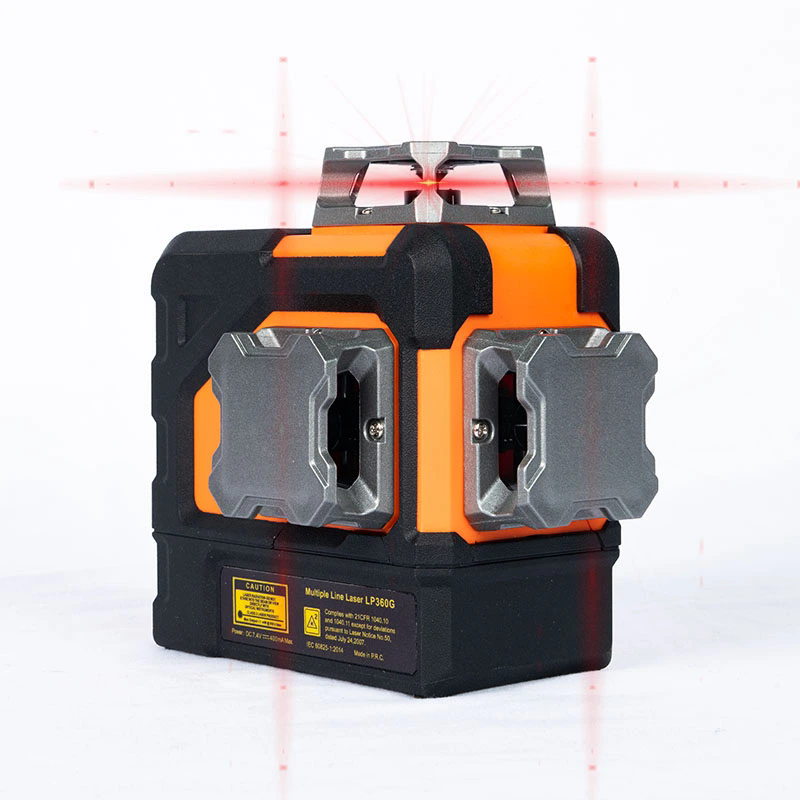
Woodworking projects often involve long workpieces: cabinet runs, shelving walls, countertops, and stair stringers. A 600 millimeter spirit level is accurate over its own length, but it cannot transfer a height across a 5 meter wall without accumulating error. A chalk line can mark a long reference, but it is a one-time mark and it is easily disturbed. A taut string can sag and is affected by wind and by accidental contact. The Red Laser Level solves these problems because it projects a continuous line that is independent of the surface and can be repositioned without leaving a mark. In our factory, we manufacture Red Laser Level units for workshop and site use, with working ranges from 10 to 30 meters. Changzhou Laizap Opto-Electro Technology Co., Ltd. has been manufacturing laser levels for over 10 years.
The reference must also be stable. A laser level that is mounted on a tripod or on a wall bracket does not move when the workpiece is handled. This allows the carpenter to check the height of each cabinet after it is hung, without re-establishing the reference.
2. How Does a Red Laser Level Project a Usable Line Across a Long Bench or Wall?
A Red Laser Level uses a laser diode that emits light at a wavelength of about 635 nanometers, which is in the visible red part of the spectrum. The light passes through a cylindrical lens that spreads the beam into a fan, which appears as a line on the surface. The line width increases with distance because the beam diverges. The visibility depends on the ambient light and on the surface color. The table below shows the line width and visibility at different working distances.
| Working distance | Typical line width | Visibility in normal shop light | Typical woodworking task |
| 3 meters | 1.5 – 2.0 mm | Excellent | Shelf layout, small cabinet |
| 6 meters | 2.5 – 3.5 mm | Good | Cabinet run, countertop |
| 10 meters | 4.0 – 5.5 mm | Moderate | Long wall, stair stringer |
| 20 meters | 7.0 – 10.0 mm | Poor without detector | Large workshop layout |
In our factory, we calibrate the line straightness of every Red Laser Level on a 10 meter test bench. The deviation from a straight line must be less than 1 millimeter over the 10 meter length. We also measure the line width at 3 and 6 meters and record the results on the test certificate. Laizap provides the test certificate with each unit.
3. What Woodworking Tasks Benefit Most From a Red Laser Level?
The Red Laser Level is most useful when the task requires a reference that spans more than 2 meters or when the task involves multiple items that must be aligned to each other. Cabinet installation is the most common example. The laser line is set at the height of the top of the cabinet run, and each cabinet is shimmed until its top edge touches the line. Shelving layout is another common use. The line is set at the height of each shelf, and the shelf pins are drilled at the line. Countertop installation uses the line to check that the countertop is level along its full length. The table below shows the typical tasks and the recommended line setup.
| Woodworking task | Laser line setup | Required accuracy |
| Upper cabinet installation | Horizontal line at cabinet top height | ±1.5 mm over 5 m |
| Shelving layout | Horizontal line at each shelf height | ±1.0 mm over 3 m |
| Countertop leveling | Horizontal line at countertop surface | ±1.0 mm over 3 m |
| Stair stringer layout | Angled line following the stair pitch | ±2.0 mm over 4 m |
| Wall panel alignment | Vertical line at panel edge | ±1.5 mm over 2.5 m |
Shop carpenter's note: The laser line is a reference, not a measurement. It shows that two points are at the same height, but it does not tell you the distance between them. The carpenter must still measure the spacing with a tape. The advantage of the laser is that it eliminates the cumulative error that occurs when a short level is moved along a long wall. In our factory, we recommend that the carpenter mark the line position on the wall with a pencil at two or three points, so that the line can be re-established if the laser is moved. Changzhou Laizap Opto-Electro Technology Co., Ltd. provides a wall mount bracket with each unit for this purpose.
4. Why Does Beam Visibility and Accuracy Depend on the Working Environment?
The visibility of the red laser line depends on the ambient light. In a shop with bright overhead lighting or near a window with direct sunlight, the red line can be difficult to see. The visibility also depends on the surface. A dark wood surface absorbs the red light, while a light surface reflects it. A dusty environment can coat the laser lens and reduce the beam intensity. The accuracy depends on the stability of the mounting and on the calibration of the unit. A laser level that is dropped or bumped may lose its calibration. In our factory, we use a glass lens with an anti-reflective coating to maximize the beam transmission, and we seal the housing to IP54 to keep dust out. Changzhou Laizap Opto-Electro Technology Co., Ltd. recommends that the unit be checked against a known reference before each critical layout task.
For bright or outdoor conditions, we offer a model with a higher power output and a detector accessory. The detector extends the working range and allows the line to be located even when it is not visible to the eye.
5. How Should a Woodworker Select and Verify a Red Laser Level for Shop Use?
The selection should be based on five parameters. The first is the working range, which should be at least 1.5 times the longest layout distance in the shop. The second is the accuracy, which should be ±1.5 millimeters over 5 meters for cabinet work. The third is the self-leveling range, which should be at least ±3 degrees so that the unit can be set up on an uneven surface. The fourth is the mounting, which should include a tripod thread and a wall bracket. The fifth is the protection rating, which should be at least IP54 for a dusty shop. The verification should include a three-point check: place the unit on a level surface, mark the line at 3 meters, rotate the unit 180 degrees, and check that the line falls on the same mark. Repeat at 6 meters if the shop requires it. In our factory, we perform this check on every unit before shipment and include the result in the test certificate.
We also recommend that the woodworker check the line thickness at the working distance. A line that is too thick is difficult to use as a reference for cabinet edges and shelf pins. A line that is too thin may be difficult to see in a bright shop. The line width at 3 meters should be between 1.5 and 2.0 millimeters for general woodworking.
Frequently Asked Questions About Red Laser Levels in Woodworking
Summary for Shop Carpenters and Cabinet Makers
A Red Laser Level is useful in woodworking because it projects a continuous reference line across a long workpiece, which a spirit level or a chalk line cannot do. The most common uses are cabinet installation, shelving layout, countertop leveling, stair stringer layout, and wall panel alignment. The visibility and accuracy depend on the working distance, the ambient light, the surface color, and the condition of the unit. The selection should be based on the working range, the accuracy, the self-leveling range, the mounting, and the protection rating. The verification should include a three-point check before each critical task. Changzhou Laizap Opto-Electro Technology Co., Ltd. has been manufacturing Red Laser Level units for over 10 years and provides full calibration and application support for woodworking customers.